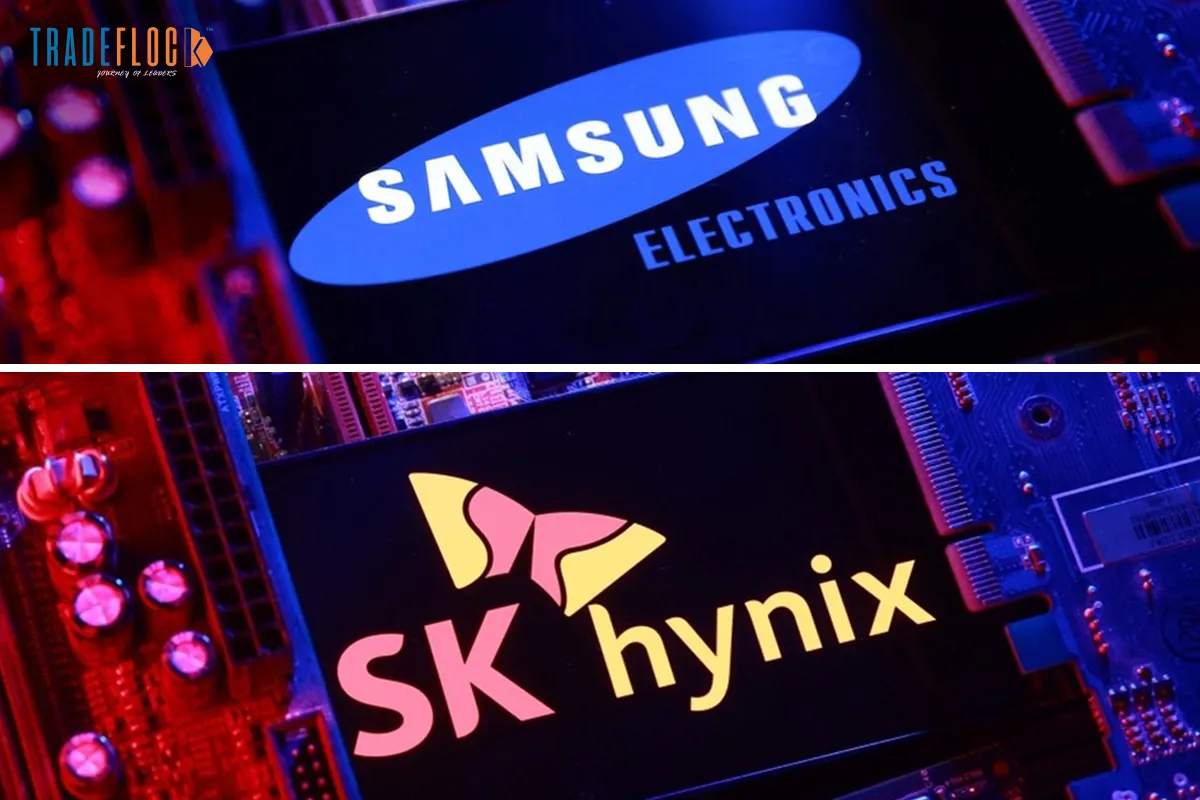
The U.S. is restricting Samsung and SK Hynix’s ability to produce chips in China by revoking authorizations that allowed them to receive American semiconductor equipment there, according to the Federal Register. Previously, these companies had exemptions from broader 2022 restrictions on selling U.S. semiconductor equipment to China. Now, they must obtain licenses for equipment purchases in China, with the revocations taking effect in 120 days. Intel, which sold its Dalian unit this year, also lost authorization but is set to maintain existing facilities via licenses, though expansion or upgrades are not permitted.
The Commerce Department stated it would approve licenses for current operations but not for capacity expansion. SK Hynix plans to communicate with the Korean and U.S. governments to minimize the impact, while Samsung declined to comment. South Korea’s government stressed the importance of stable operations in China to global supply chains and is engaging with Washington to mitigate effects. China’s commerce ministry opposes these U.S. measures and will take steps to protect its enterprises.
The license changes could lead to lower sales for U.S. semiconductor equipment companies such as KLA, Lam Research, and Applied Materials, although they did not comment right away. The shares of these firms declined: Lam dropped 4.4%, Applied fell 2.9%, and KLA decreased by 2.8%. Meanwhile, Chinese chipmakers and Micron might benefit. The move comes amid ongoing U.S.-China trade tensions, with the effects of tariffs and the trade war still lingering. The U.S. previously discussed revoking authorizations as a contingency if trade negotiations collapsed, but a tariff truce remains in place until November.
The restriction could hinder Korean chipmakers’ production of advanced chips in China and potentially boost Chinese equipment companies and Micron. However, if further actions target Chinese firms like YMTC and CXMT, market sharing could shift further from Korean to Chinese firms. Meanwhile, license applications by U.S. firms to export to China are backlogged, resulting in billions of dollars in semiconductor equipment sales.
Also Read: Google Cuts Approximately 35% of Managers Overseeing Small Teams
U.S. chipmakers like Samsung and SK Hynix currently hold Validated End User status, enabling easier and faster export of goods. This status will be revoked, adding another layer of restriction. Overall, these measures signify escalating U.S.-China tech tensions, with significant implications for global semiconductor supply chains and market dynamics.